| Author |
 Topic Topic  |
|
zerksies
Double Platinum Member

USA
3406 Posts |
 Posted - 01/04/2009 : 23:44:26 Posted - 01/04/2009 : 23:44:26


|
| Has anyone done this i got a twin reverb that the power tubes are starting to go. i had the amp serviced about a month ago and the guy said i still had some time left with the tube. but i have just started to notice a volume loss.I know i need new power tubes.I am handy with a multimeter but have never done anything like this. i can get a kit from groovetube with a tool and instruction book.Is it really that hard. getting my amp to guy guy to fix is kinda tough. our hours just don't mesh.Is it really that hard? |
|
|
Dr. Bob
Moderator

Australia
6593 Posts |
Posted - 01/05/2009 : 02:02:39

|
quote:
Originally posted by zerksies
Has anyone done this i got a twin reverb that the power tubes are starting to go. i had the amp serviced about a month ago and the guy said i still had some time left with the tube. but i have just started to notice a volume loss.I know i need new power tubes.I am handy with a multimeter but have never done anything like this. i can get a kit from groovetube with a tool and instruction book.Is it really that hard. getting my amp to guy guy to fix is kinda tough. our hours just don't mesh.Is it really that hard?
Before attempting any repairs on Tube/value equipment.
You must remember that there are LETHAL VOLTAGES floating around inside this equipment.
And High Voltage capacitors can, & do retain their charge in a lot of cases.
Especially if the bleed resistors or bleed path has become faulty.
Never put both hands into this equipment at one time, as it allows a possible path through your chest & heart.
An old tube tech, taught me to always put one had in my pocket, because of this possible scenario.
The answer to your question, is yes, you will be able to do it, but with the correct equipment & training or tutorial/s.
The situation is more critical, as you are working on the equipment while it is fully live.
Unlike when you are replacing some parts with the power turned off,
& after making sure, you have discharged all the high voltage caps.
Weber has a great set of DVD tutorials on this, & many other tube repair/maintenance amp aspects.
As Undoubtedly so do others like Groove Tubes.
Make sure you let them know you are a beginner at this, they should spend more time with you, I know I would.
Let us know how you get on.
Regards Dr. Bob  |
Edited by - Dr. Bob on 01/05/2009 02:08:33 |
 |
|
|
zerksies
Double Platinum Member
USA
3406 Posts |
Posted - 01/05/2009 : 02:52:57
|
| you got a link for weber? |
|
|
|
Dr. Bob
Moderator
Australia
6593 Posts |
Posted - 01/05/2009 : 07:22:05
|
quote:
Originally posted by zerksies
you got a link for weber?
He can be found here:
http://www.kendrick-amplifiers.com/
The books & DVD
http://www.kendrick-amplifiers.com/Merchant2/merchant.mvc?Screen=CTGY&Store_Code=KOS&Category_Code=05
I don't know what part of the USA you are in, but one of our members
BASN (Brian), is a fabulous tube amp tech, & has all the RIGHT GEAR to service & realign any amplifier.
I am not affiliated with him, obviously being here in Australia, but we do send each other emails now & again.
And he has all the Weber gear & a huge library of tube amp schematics.
and the Knowledge & experience to go with it.
He is around the Minnesota area.
You could email him via the forum.
BASN
Regards Dr. Bob |
Edited by - Dr. Bob on 01/05/2009 07:52:53 |
|
|
|
FRANZONI
Double Platinum Member
Ireland
3543 Posts |
Posted - 01/05/2009 : 15:04:23
|
The guy over in Eurotubes www.eurotubes.com has the weber bias probes...i'm thinking of getting a couple soon for the future,probably the safest way for people like me and you to bias our amps...i would like to second what Dr Bob said about the insides of valve(tube) amps..i got a nasty belt out of my musicman when changing the caps a while back...lucky enough it was on the bias supply caps which are rated at 150 vdc but still enough to scare the hell out of me and left me sitting down for about 10 mins afterwards...to be honest i know you should by rights bias new power valves,but i've found if the ones coming out are being replaced by the same make and type going back in you MIGHT be alright... i've never re-biased my amp in all the time i have it with no major probs except for a filter cap failing on me and this cap was an original mallory filter cap over 35 years old.... |
|
|
|
Dr. Bob
Moderator
Australia
6593 Posts |
Posted - 01/05/2009 : 16:07:30
|
Hi Franzoni & guys
quote:
i would like to second what Dr Bob said about the insides of valve(tube) amps..i got a nasty belt out of my musicman when changing the caps a while back...lucky enough it was on the bias supply caps which are rated at 150 vdc but still enough to scare the hell out of me and left me sitting down for about 10 mins afterwards...
I think Franzoni has really brought home how dangerous a tube amp can be; He was very lucky to be honest.
In most cases, the bias is more like -50 to -60 volts DC.
But I'm sure that to Franzoni, it felt like 150V or more.
And ruined the rest of his day.
Just remember guys, in Boogies & Fenders, the 6L6's are at about 480VDC
and a friggin' lot higher on some Marshall's & other amps that run the tubes with really hot voltages on the plates.
I have seen amps that have 600VDC to 700VDC plus on the plates.
Even the preamp tubes tend to have 120VDC to 300VDC on the load resistors feeding the plates.
Franzoni's Twin tube classic has about 300VDC feeding the plates.
And my EHX English Muff'n is about the same.
i think Franzoni's idea about getting one of the tube bias adapters is a good one.
Just remember to only use one hand when working on live tube gear.
And keep the other in in your jeans/trouser pocket.
This is not meant to be any kind of scare tactic to stop you working on your own tube amp,
it's meant to serve as a caution.
And remember some of the 150 to 300 watt solid state amps have deadly voltage rails, that feed the output stage,
like +/- 75VDC to +/-150VDC rails.
Yeap you add the plus & minus rails together, so you end up with 150V & 300V on these amps, And at really high Currents.
Note: Plates = Anodes
Regards Dr. Bob |
Edited by - Dr. Bob on 01/05/2009 16:10:10 |
|
|
|
DeFrag
Moderator
USA
3409 Posts |
Posted - 01/05/2009 : 18:57:45
|
Yikes Franz! You could have been worm fodder.  |
|
|
|
FRANZONI
Double Platinum Member
Ireland
3543 Posts |
Posted - 01/05/2009 : 19:50:18
|
quote:
Originally posted by DeFrag
Yikes Franz! You could have been worm fodder.
In a moment of tiredness i forgot the Doc's golden rule about keeping one hand in the pocket and put it on the chassis = franzoni doing a quick impersonation of a christmas tree.... lucky i don't have any hair or i would of ended looking like yahoo serious in 'Young Einstein'....... lucky i don't have any hair or i would of ended looking like yahoo serious in 'Young Einstein'....... something i learned as i don't do this for a living and need a quick turnaround on repairs is ... something i learned as i don't do this for a living and need a quick turnaround on repairs is ...
A/....If it isn't going right for you..take a break and go make a cup of tea/coffee etc.... or if you can leave it and come back to it the next day with a clear head... i did this after the belt and it all worked out better in the end..
B/ If you poking around inside looking for a loose wire(i was fixing a loose connection off the power supply to the bias board) don't use your finger or a pencil(the graphite can conduct electricity) use a chopstick/piece of wood.. etc...
C/ MAKE SURE YOU DRAIN THE CAPS.......
D/ IF your not happy or confidant in tackling it...DON'T..i had to out of necessity 'cause there isn't any amp techs around where i live anymore that work on tubes/valves plus i have a brother in law who is a Electronic Engineer and the singer is a qualified electrician who i could turn to for advice plus the guys on the musicman amp forums were also very helpful,they have a genuine love of this amp and love to help anyone trying to keep one 'on the road'....
P.S.... A BIG thank you to the good Doctor Bob for his advice as it was invaluable to me in attempting/fault finding the problem with the musicman.....
P.P.S... My Musicman is one of those amps with the lethal plate voltages Dr Bob talks about...725 in the hi mode and around 450 in the lo mode on the selector switch on the front panel..on the advice from the guys over on the Musicman amp forum i run it now on 450 as it's less wearing on the amp..they reckon you only need the extra power on outdoor/big stage gigs.... |
Edited by - FRANZONI on 01/06/2009 13:44:38 |
|
|
|
DeFrag
Moderator
USA
3409 Posts |
Posted - 01/06/2009 : 01:31:50
|
quote:
Originally posted by FRANZONI
P.P.S... My Musicman is one of those amps with the lethal plate voltages Dr Bob talks about...725 in the hi mode and around 450 in the lo mode on the selector switch on the front panel..on the advice from the guys over on the Musicman amp forum i run it now on 450 as it's less wearing on the amp..they reckon you only need the extra power on outdoor/big stage gigs....
We used to have an apprentice amp tech just down the street... no, no. 
My dad was actually was a Master Electrician & I helped him wire many houses & some commercial jobs. He was deathly respectful (no pun intended) of high voltage, never wore his wedding band, & was the consummate one-handed electrician with the other firmly in his pocket.
With 450-725V floatin' around in many amps out there, fixing your own is not the thing to do to save money unless you know what the fug you're doing. Of course we all know this but take chances anyway looking & poking.
I've recently read that you can actually be electrocuted by a 9VDC battery. Sure, I know you'll say 9V won't punch through skin. What I read was a guy wanted to take his internal resistance or whatever & stuck (I think) DMM probes deep enough into his hands that the little voltage present was a moot point as the current raced through & Darwined his stupid ass. I'll see if I can find the article.
Here it is:
http://www.darwinawards.com/darwin/darwin1999-50.html
There are also claims of eight people a year dying in Australia (why just Australia?) from testing batteries. Dr. Bob..? hehe |
Edited by - DeFrag on 01/06/2009 01:42:55 |
|
|
|
Disco Stu
Silver Member

USA
303 Posts |
Posted - 01/06/2009 : 08:21:10
|
Thanks All Y'all for this prudent advice. I must say that this board has the highest percentage of rational and knowledgeable people of the several which I frequent...
So when I go to change the filter caps on my old Premier tube amp, what components do I have to be wary of? How does one drain the excess stored voltage from a filter cap or other components?
It would be nice to not get a shock. |
|
|
|
Dr. Bob
Moderator
Australia
6593 Posts |
Posted - 01/06/2009 : 12:35:24
|
quote:
Originally posted by Disco Stu
Thanks All Y'all for this prudent advice. I must say that this board has the highest percentage of rational and knowledgeable people of the several which I frequent...
So when I go to change the filter caps on my old Premier tube amp, what components do I have to be wary of? How does one drain the excess stored voltage from a filter cap or other components?
It would be nice to not get a shock.
Thanks for your polite comment about the forum Disco Stu.
Now I'm really curious as to which other sites you visit?
Do you have a schematic of you Premier Amp?
And which model number-name do you have?
perhaps you could upload some internal pics of it, from both side, when you have it apart.
And even be careful where you put your hands & fingers, when you pull the chassis out of it's case.
Regards Dr. Bob
|
|
|
|
FRANZONI
Double Platinum Member
Ireland
3543 Posts |
Posted - 01/06/2009 : 13:11:05
|
quote:
Originally posted by Disco Stu
Thanks All Y'all for this prudent advice. I must say that this board has the highest percentage of rational and knowledgeable people of the several which I frequent...
So when I go to change the filter caps on my old Premier tube amp, what components do I have to be wary of? How does one drain the excess stored voltage from a filter cap or other components?
It would be nice to not get a shock.
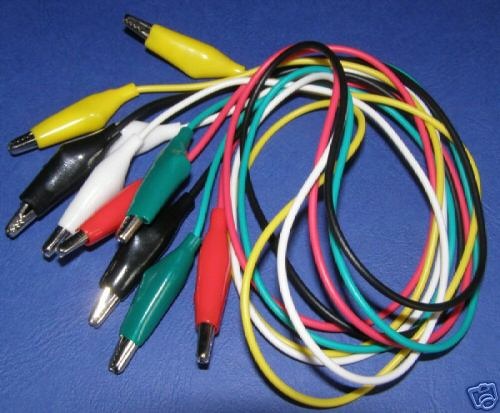
a piece of wire with a couple of croc clips either end..one on the + side of the cap the other on the chassis..some people recommend a resistor in between to do it slower,some peoe just use a screwdriver..as far as i know(which isn't much...) unplugging the amp from the wall while playing through it will do it as well..BUT BE CAREFUL... caps can have a 'memory' and recharge themselves a little even after the initial drain so i've been told...... |
|
|
|
Dr. Bob
Moderator
Australia
6593 Posts |
|
|
DeFrag
Moderator
USA
3409 Posts |
|
|
starr36
Platinum Member

Canada
1172 Posts |
Posted - 01/20/2009 : 05:01:24
|
You all will hate me for this. Just buy a Mesa Boogie "anything" for like $3,000 USD and you need not ever fret about tube bias. Boogie are made with FIXED bias and MATCHED TUBES. Tube Biasing was designed in to sloppy circuitry to compensate for poor analogue component matching in early amp designs. way way bad thing of the past - BUT BUT BUT (don't shoot me yet) IF you got the skills and are gonna live for ever... BIAS-AWAY!!!
Put that hand in your pocket... I saw that. I did. |
|
|
|
starr36
Platinum Member
Canada
1172 Posts |
Posted - 01/20/2009 : 05:29:01
|
| gawed. its taking forever to get to 1000 posts. dangit. |
|
|
|
Topic |
|




 Tube Bias